Friday, 19 April 2013

#209 No Country For Old Men (2005)

Author: Cormac McCarthy
Title: No Country For Old Men
Genre: Novel
Year: 2005
Pages: 310
Origin: bought second-hand
Nod Rating: 4 nods out of 5


'That is no country for old men. The young
In one another’s arms, birds in the trees
– Those dying generations – at their song,
The salmon‐falls, the mackerel‐crowded seas,
Fish, flesh, or fowl, commend all summer long
Whatever is begotten, born, and dies.
Caught in that sensual music all neglect
Monuments of unageing intellect.

An aged man is but a paltry thing,
A tattered coat upon a stick, unless
Soul clap its hands and sing, and louder sing
For every tatter in its mortal dress,
Nor is there singing school but studying
Monuments of its own magnificence;
And therefore I have sailed the seas and come
To the holy city of Byzantium.

O sages standing in God’s holy fire
As in the gold mosaic of a wall,
Come from the holy fire, perne in a gyre,
And be the singing‐masters of my soul.
Consume my heart away; sick with desire
And fastened to a dying animal
It knows not what it is; and gather me
Into the artifice of eternity.

Once out of nature I shall never take
My bodily form from any natural thing,
But such a form as Grecian goldsmiths make
Of hammered gold and gold enamelling
To keep a drowsy Emperor awake;
Or set upon a golden bough to sing
To lords and ladies of Byzantium
Of what is past, or passing, or to come'

'Sailing to Byzantium', by Y.B. Yeats

Famed American thriller writer, Cormac McCarthy, pinched – as all good writers are prone to do – words from the opening line of Yeats’ poem for the title of his 2005 novel. Better known as the Cohen brothers resulting Oscar winning film, this story follows the chase and contrasting view-points of three men: the devilishly evil Anton Chigurh; the plucky chancer Llewellyn Moss; and the older sheriff Ed Tom Bell.

The plot finds Moss stumbling across a drug deal gone bad; dead bodies litter the ground and a bag of millions has been left. Thinking his chance has come, Moss grabs the cash. But the cash has an owner, and hitman and sociopath Chigurh is sent in to reclaim it. Shoot outs abound in this book of cat and mouse, with the sheriff always two steps behind in attempting to help Moss and solve the crime. These three men all had different, at times, competing philosophies. There is the sheriff of the old ways and the old world, and Chigurh – a new breed, ready for the cold, clinical and soulless future. Moss himself is stuck between these two worlds – wanting glory and being selfish to go for it, but finding himself unprepared.

Brilliantly played by Javier Bardem in the Cohen brothers’ film, the essence and menace of Chigurh is present within McCarthy’s text. If anything, he is shown to be even more violent, with various shoot-outs being done away in the film. He toys with those around him, using a symbolic coin as the surveyor of destiny; something that McCarthy devotes considerable detail, especially in Chigurh’s conversation with the unwitting gas-station owner. Better informed of Chigurh’s threatening motives is another, less powerful, hitman, Wells. Chigurh discusses his own unrelenting ethical code to his work, all of which results in Wells’ demise in a passage that shows off McCarthy’s ability to string a well crafted sentence:

‘Just you do it. You godammed psychopath. Do it and goddam you to hell.
He did close his eyes. He closed his eyes and he turned his head and he raised one hand to fend away what could not be fended away. Chigurh shot him in the face. Everything that Wells had ever known or thought or loved drained slowly down the wall behind him. His mother’s face, his First Communion, women had known. The faces of men as they died on their knees before him. The body of a child dead in a roadside ravine in another country. He lay half headless on the bed with his arms outflung, most of his right hand missing. Chigurh rose and picked up the empty casing off the rug and blew into it and put it in his pocket and looked at his watch. The new day was still a minute away.’
One of the story’s unsettling moments is Chigurh’s visit to Moss’s young widow, after Moss has been erased from the story. He finds her and kills her having made a promise to Moss that he would; the widow tries to reason, saying how such a promise doesn’t make sense any longer, now that Moss is dead. But Chigurh explains himself:

‘I had no say in the matter. Every moment in your life is a turning and every one a choosing. Somewhere you made a choice. All followed to this. The accounting is scrupulous. The shape is drawn. No line can be erased. I had no belief in your ability to move a coin to your bidding. How could you? A person’s path through the world seldom changes and even more seldom will it change abruptly. And the shape of your path was visible from the beginning.’
The sheriff is not simply a bystander to events; his voice provides the heart of the novel, being interspersed within the action. His words are a stark contrast to the shoot-outs and action depicted in the novel. A man of older times, he realises his time and generation are passing as the body-count rises:
‘I don’t know. I used to say they were the same ones we’ve always had to deal with. Same ones my granddaddy had to deal with. Back then they was rustling cattle. Now they’re runnin dope. But I don’t know as that’s true no more. I’m like you. I ain’t sure we’ve seen these people before. Their kind. I don’t know what to do about em even. If you killed em all they’d have to build an annex to hell.’
The sheriff has the last word in the novel, recounting his dream that includes his late father in a seemingly clouded purpose. Bumbling could be one word used to describe this, but the Worm is more charitable in believing that McCarthy is attempting to illustrate the divide, beliefs and values of the different generations of characters within the text. Being set in 1980, before the current IT revolution, it was a time in the last throes of customs that had benefited the industrialising world. Today, in 2013, the last vestiges of the old world are fading around us. Sheriff Ed Tom would surely be a relic, just thirty years later.

But all is not well with the novel. McCarthy’s lack of inverted commas for dialogue is confusing at times, bringing the Worm to wave his fist in annoyance on many a page. Having minimal knowledge of McCarthy’s previous work, the Worm is left wondering why such a tactic is employed. It could be a stylistic feature, as seen – better utilised – by other writers, notably Trainspotting author Irvine Welsh. Or, as the Worm’s suspects, it could be a telling mark from the story’s previous incarnation as a screenplay: why bother adding all those pesky speech-marks? (The Worm realises all he need do is walk into any book-shop and find the ‘M’ section, open up a different McCarthy book, and find the answer… but that would be far too simple, wouldn’t it, dear reader.)

One bugbear of many a-viewer of the Cohen brothers’ film was the exclusion of Moss’s final death scene. Moss acts, in many ways, as the central mover of the story, and we – the reader/viewer – invest in him in attempting to survive or tie up the plot in a satisfactory way. Like the film, McCarthy does away with any such resolution. In fact, the book focuses more on Moss’s return to action after his bloody shoot-out with Chigurh, as he picks up a young-female hitchhiker. But yet that resolution is missing, with McCarthy’s cheekily moving the focus away. With Moss’s death, the reader is left with Chigurh’s fury and the sheriff’s same reflecting manner. For this, the Worm praises the author (and to a lesser extent to the Cohen brothers for having the courage to stick to the source material) in utilising this move in the plot. It complexes and unsettles the reader; putting us in a position where we never usually find ourselves, both within written fiction and in the cinema.

Although it falls just short when compared to its cinematic brother, McCarthy’s No County For Old Men is an engaging book that asks many questions, but fails – intentionally – to answer them. It unsettles and confuses, and yet at the same time is wrapped up within the dimensions of a fairly standard thriller novel. In Anton Chigurgh, McCarthy has created an interesting and complex character; something that is becoming a rare breed in modern fiction. It is a read in which the Worm has become fond of, and in which other readers should – at the very least – take a peek at.


Buy a copy here

Sunday, 14 April 2013

#208 The Shining (1977)

Author: Stephen King
Title: The Shining
Genre: Horror Novel
Year: 1977
Pages: 410
Origin: bought at a second hand bookstore for £1.99
Nod Rating: 3 nods out of 5


“Here’s Johnny!” teased the warped and insane Jack Nicholson in the cult film The Shining. It is a movie that has terrified a-many over the past three decades; a film that can stand its head high and pride amongst the heavyweights of Stanley Kubrick’s catalogue.

However, it is an image at odds with Stephen King’s original creation. Before the image of the axe smashing through the door and before the twins standing in a hallway of oozing blood there was the less extreme text that had a bigger, more caring spirit. King himself has previously stated his distaste for Kubrick’s film; he even help oversee a later television adaption that remained truer to the source material. But in a battle between the two, which version stands up best? Thankfully, the Worm is here to help decide the contest.

Although, it must be stated for the record, the Worm’s interest in reading his first Stephen King novel for this blog is not motivated by the Kubrick-King “feud”, but rather by the news that the author was planning and writing a follow-up novel to The Shining: Dr Sleep. It follows the life of Danny decades after the horrific events occurred at the Overlook Hotel. The Worm was interested in what King would do have returned to a much earlier creation, and therefore the gauntlet was laid down to read his first novel before devouring the second.

The plot is a well-known one: Jack Torrance is given the job of maintaining the snow-ridden Overlook Hotel during the winter season. A struggling writer, he intends to write his masterpiece amongst the peace. Also present is his wife and their son, Danny; it is Danny who has the ability to “shine” and look into the thoughts and emotions of others. He is aided (and hindered) in this ability by his imaginary friend Tony; wonderfully shown in Kubrick’s film by a waggling finger (1-0 to Kubrick, it would seem). Whilst at the hotel, events take a turn for the worst; well, this is the horror genre, after all. Jack is seemingly possessed by the potency and history of the hotel, whilst Danny’s images of death and disaster become all the greater. The hotel’s supernatural spirit takes hold, turning the father against his family.

The book goes into greater detail into the mentality of Torrance, his relationship with Danny and the turmoil of his marriage to Wendy. Where the film scratches the surface, in a seeming triumph of style over substance, King is intent to get across the message that Jack Torrance is not a maniac in the making, but rather a normal guy who is moved to do extraordinary things. This investment, despite being heavy-loaded in the first section of the novel (more than one hundred pages pass before we move onto the setting of the hotel) pays dividends come the book’s climax. Here, in a bloody pitted duel between father and son, Jack is able to reach into the love he shares with his son and help him escape by bludgeoning himself to death (King equalises to make it 1-1).

However, the book has many annoying features: nowhere more clearly than in King’s writing style. He displays a seeming inability to tie up a chapter, adding superfluous text and clogging up the book with pointless pages of print. Yes, it is true that the reader finds out much more of the family than the film can offer; but it must be asked: is this entirely beneficial? The hints and forewarning of the trouble ahead is enough to distract the reader, as is the annoyance that is the character of Danny. Shown in the film to be a quiet, disturbed child, in the novel he takes on an irritatingly developed mindset; one more fitting for a child of ten or more years, rather than a six-year old (2-1 to Kubrick).

But, the biggest gripe of King’s novel is the ending (again, demonstrating his inability to successfully conclude a segment of writing). Yes, we have the death of Jack as well as the blowing of the boiler – itself a metaphorical indicator of the rising tension throughout the novel – but after this point we, the readers, are left to follow a pointless summary (Final score: 3-1 Kubrick).

Both novel and film exist and stand on their own merits. Each is a different, and for that both reader and cinema-goer should be thankful. For King and fans of the original novel, there is no hope of defeating the movie, such is its iconic status. However, King deserves the kudos for bringing these characters to life. Despite the sometimes pedestrian writing, the author brings a tale to terrify us – but a tale that has heart on the possibilities of love triumphing over evil. This may not Stephen King’s best work; but it may just be his most memorable.


Buy it here

Thursday, 11 April 2013

#207 Why School? (2012)

Author: Will Richardson
Title: Why School?
Genre: Education
Year: 2012
Pages: 50
Origin: read on a Kindle
Nod Rating: 3 nods out of 5


‘Education, education, education’, once trumpeted young, dynamic leader Tony Blair; this was, of course, before this image was replaced with the older, deceitful, disgraced former leader Tony Blair. But that word – not necessarily repeated three times – is one loaded with ideology and contrasting viewpoints. Education remains a hot potato in political terms, with current Education Secretary Michael “I-don’t-listen-to-anyone” Gove pressing ahead with some of the biggest changes seen in a generation. In short, it is a topic that almost nobody can agree on.

So, please enter the arena Mr Will Richardson: a man who embraces technological change. He argues that education must change in order to obtain the full potential of a new generation who cannot or will not play by the old rules; hence the book’s subtitle: ‘How Education Must Change When Learning and Information Are Everywhere.’ It is, as Richardson notes, a mammoth task: ‘The roots of 150 years of tradition around schooling run deep, especially when most of us are products of that experience.’ But it is a debate that has raged in educational circles for more than ten years, most notably with Marc Prensky’s announcement of “Digital Natives”, and how the old theories of education will not suffice.

Thankfully, at no point does Richardson become a demagogic writer; and neither does he maintain a firm standpoint. His reasoning is the result of simple common sense on the changing world around us:

‘The abundance of information and people connected online is changing government (Wikileaks), health care (Foldit), music (Spotify), shopping (Amazon), and just about every other aspect of our lives in one way or another. Institutional change is everywhere, and, as author Clay Shirky says, people are finding out quickly that “it’s not optional.” So why would we think the institution of school would be immune? It’s not.’
Furthermore, Richardson highlights the National Council of Teachers of English who recently issued a set of twenty-first century “literacies”; all of which can be met – the author argues – by the use of technology in the classroom. These include developing proficiency with the tools of technology, building relationships with others, solving problems collaboratively, as well as create, critique, analyse and evaluate multi-media texts, among others.

Published as an e-book by the fantastic TED – and bought as part of the innovative Kindle Single series - Richardson uses this platform to “flesh out” ideas. The central idea is the need to put in the dustbin of history the old ways of doing things that don’t help children learn; including pointless testing and rote learning. Instead, the thirst for learning – and equipping students to learn successfully – is the central key. Richardson writes:

‘I’d articulate the shift to teachers like this: Don’t teach my child science; instead, teach my child how to learn science – or history or math or music.’
But have no fear, dear reader – the Worm is not a 100% signed up Richardson fan. The author places too great a faith in the power of technology. Yes, undoubtedly it has the ability to join others in a one massive network, but technology – new flashy shiny things – also have the power to distract students and sidetrack a lesson. The old ways cannot be simply forgotten just because they are “old”; the best bits of both old and new must be married together with the aim of evolutionary development, rather than revolutionary overthrow. Ultimately, a teacher and student should still be able to exist without the use of an iPad or a blog to come in and save the day.

Having read an early published work by Richardson (on the topic of blogs), the Worm can safely state that Richardson has developed as a writer of ideas. However, this short e-book is devoid of the ambition of grapping the reader by the scruff of the neck; rather, it attempts to get across an opinion in a fairly light-hearted manner. Richardson is a good writer who pokes fun and makes jokes whilst making many rational points. The Worm, for one, would like to read much more of such points in a form larger than this Kindle Single.

Buy it here
or
Read Will Richardson's blog here

Saturday, 6 April 2013

#206 United States 1776-1992 (2001)

Authors: Derrick Murphy, Kathryn Cooper, Mark Waldron
Title: United States 1776-1992
Genre: History
Year: 2001

Pages: 410
Origin: a tried and trusted library book
Nod Rating: 2 nods out of 5


Two hundred and sixteen years of history of one country, contained into four hundred and ten pages of text. The United States seems to hold a special allure amongst historians: of the new world freed from the tyranny of the old, expanding to become the world’s only superpower after decades of frantic growth. It is like the countries of the world – in language and customs – and yet, unlike anything else on this planet. A land of contradictions; the same country that can produce works of art of the like of the Worm’s favourite author, William Faulkner, and also produce a President of the make-up of George Bush.

This textbook focuses on particular eras of the history of the United States, including the early years of Washington and Jefferson; Western expansion in the 1800s; the causes and course of the Civil War; the consequences of the war in what is termed ‘the Gilded Age’, foreign policy, including the Spanish, First and Second World wars; the boom and bust of 1919-1933; Roosevelt’s New Deal period; the Cold War; the civil rights movement, and recent domestic policy.

There is a large focus on the second half of the twentieth century, with two whole chapters devoted to the Cold War (including one on the USA in Asia from 1945-1973), as well as two focusing on domestic policy in the post-war period. It is noted that these are particularly big events in American’s recent history; but the extended focus skews the balance of the book.

Ultimately, this is everything that anyone would need in becoming acquainted with such a history. For the Worm, this wasn’t a first experience of reading up on the history of the States; however, it was interesting to find focus on different presidents. These included the importance of the Polk administration in the expansion of the west in the 1840s, the growing tension of Lincoln’s presidential election victory in 1860, as well as the succession of failed presidencies in the post-Civil War period, whose scandals and carpet-bagging put many modern corruption incidents in the shade.

As can be surmised by this “best-bit” collection, the book focuses heavily on the men (usually white, usually Christian) in charge, and less on faceless social changes. Regular readers of this blog might find it a tad rich of the Worm to be criticising this book for doing the exact same thing the Worm scolded Sked’s history of the Habsburg empire for not doing; and yes, dear reader, you would be right: the Worm is an erratic creature. However, the lack of historical debate – despite bite-sized chunks, such as the Turner Thesis relating to the idea of America’s ‘Manifest Destiny’ – leaves the reader wanting much more from the reading experience.

Of course, you – the readers out there – might wish to dispute that this book never had the intention of providing greater insight into America’s history. And, you are correct to object. On the plus side of this publication are the strong collection of maps, a framework of key events, and a glossary of useful terms. Furthermore, there is an interesting feature of the evolution of the governmental departments, including who held what in the key ministries as the decades progress.

This book is a solid history that never threatens to become a captivating read; it keeps to the facts, and for an introductory overview of two hundred years of history, it fits the bill quite well.


Buy it here

Tuesday, 2 April 2013

#205 The Importance of Being Earnest (1898)

Author: Oscar Wilde
Title: The Importance of Being Earnest
Genre: Play
Year: 1898 (originally performed 1895)
Pages: 60
Origin: read on the Kindle
Nod Rating: 5 nods out of 5
‘The good ended happily, and the bad unhappily. That is what Fiction means.’
Miss Prism, The Importance of Being Earnest
The witticisms of Oscar Wilde are, perhaps, known more widely than his very works of fiction. Such quotes range from the humorous to the wise, including ‘Experience is simply the name we give our mistakes’ and the sublime and uplifting: ‘We are all in the gutter, but some of us are looking at the stars’. His smaller works, including poetry and prose, fail to stand-up to such wordplay; all, but his greatest success as a writer, The Importance of Being Earnest.

However, his biggest triumph brought about his downfall. A feud with the Marquess of Queensberry led to a courtroom trial in which Wilde’s homosexuality was revealed, resulting in imprisonment for the playwright. The fallout led to the play being closed and Wilde’s exile in Paris where he soon died. Such a story was enough to capture the heart of the Worm; his only previous contact with Mr Wilde was in the form of the lone novel, The Picture of Dorian Gray. Read in the days before the blog was born, it failed to excite the Worm. The Importance of Being Earnest would be a different story altogether.

The play – like many other great plays (notably Gogol’s The Government Inspector) – is a comedy of mistaken identities. Two friends take on the moniker “Earnest”, leading to a serious of mishaps, arguments and interesting conversation about ‘Bunburying’. Its format is one followed through the years in British comedy, with Cleese’s 1970s sitcom Fawlty Towers coming easily to mind. The play’s subtitle – A Trivial Comedy For Serious People – serves it just as well now, as it did in the late Victorian period. Wilde’s trademarked witticisms abound on every page, as found dressed in the role of the ever playful Algernon:

‘The truth is rarely pure and never simple. Modern life would be very tedious if it were either, and modern literature a complete impossibility!’
As well as the famous:

‘All women become like their mothers. That is their tragedy. No man does. That’s his.’
But more than this, Wilde pokes fun at the society around him (the very same society that would soon condemn him), including the importance placed on manners and class. Jack is forbidden to marry due to lack of social standing; his redemption is found in a ridiculous back-story.

For those unacquainted with the play, watch it first. Reading the written word of the play was never the original intention; however, Wilde’s fast wordplay can only be fully enjoyed – and understood - when having the leisure to read. The Worm does not give the play 5 nods for its characters or plot, but rather in the full force of Wilde’s writing. His downfall may have led to a curtailment of more works on the stage, but his fame was secured with this masterful and delightful play.


Buy it here

Tuesday, 26 March 2013

#204 The Decline & Fall of the Habsburg Empire (1989)

Author: Alan Sked
Title: The Decline & Fall of the Habsburg Empire 1815-1918
Genre: History
Year: 1989
Pages: 280
Origin: a tried and trusted library book
Nod Rating: 3 nods out of 5


‘The Habsburgs were Europe’s greatest dynasty.’
The Habsburgs were a family that ruled much of central Europe for many centuries, from the medieval world to the modern. They fought great territorial wars against the French, perhaps most famously Napoleon some two hundred years ago. And after the great general’s final defeat at Waterloo in 1815, the Habsburg family survived to see a changing, industrialising world. Yet by the end of the First World War the empire was shattered into numerous countries and states, and the Habsburg dominance was never to return. It is these final hundred years that the historian, Alan Sked, has decided to focus on in the hope of finding just when the decline of their rule began.

Rather than a narrative account of the last one hundred years of the empire – from the final defeat of Waterloo to the defeat of the German forces at the hands of the western allies in the Great War – Sked investigates some of the big arguments surrounding the demise. These arguments focus on the all-powerful and pervasive figure of Metternich and his widely touted “System”; the causes and impact of the 1848 revolutions that spread across the continent; the coming together and relationship of the reformed Dual Monarchy between Austria and Hungary; the road to the First World War, labelled her by Sked as ‘the road to disaster’. If too great a number of pages is devoted to the consequences of 1848, perhaps too little room is given to the big figures of the period, including Metternich – who merits a whole chapter – himself. The famed historian Carlyle is quoted as having said that history is the biography of great men; but this is an interpretation not viewed by Sked. Biography is skewed in the place of analysis; with the author stating that there is not space for a recounting of events: either from a narrative or biographical perspective.

Sked’s conclusions are interesting to read; the biggest of all, perhaps, is the use of the words ‘decline and fall’, with Sked arguing that such terms is ‘misleading’. He discusses the idea that the empire could have continued to exist, if only defeat in the First World War did not happen. A German victory would have seen the empire’s survival in some form or another, but such speculation is beyond the pale of serious analysis: and a German victory would change the map of all Europe and the world forever, including what it meant for the survival of the Russian revolution and the stunted rise of a Hitler. Perhaps a different question to ask is: how did the Habsburg empire survive for so long? Even in Metternich’s day – in the first half of the nineteenth century – it was already becoming an anachronism, what with the rise of new nation states. Austria-Hungary’s bizarre set-up of a multitude of tongues and peoples being tied to a personal monarchy is a feature more fitting of the medieval age. But yet it continued and survived, due to the strong efforts of Metternich, and despite the growing forces of nationalism, of liberalism, of revolution, and the new kid on the block to the north of it: Germany.

Researched, written and published at the tail-end of the Communist era in eastern Europe, Sked’s analysis is rooted in Cold War rhetoric. But, like all good historians, he was aware how his own interpretations of the facts would change with succeeding generations, noting how fresh interpretations would bring about new meanings. Sked himself, within the book’s introduction, notes just this, hoping that the ‘book might encourage others to help fill in the gaps.’

Greatest dynasty, as Sked claims, perhaps. However, despite being rooted in deep research and rational analysis, this book falls short of being “the greatest” account on the Habsburgs. The dynasty was filled with too many rich characters for them to be dismissed in place of hard, Gradgrind-esque facts; although there is a mind with its light on in this book, there is the distinct lack of a beating heart.


Buy it here

Saturday, 23 March 2013

#203 Juliet, Naked (2009)

Author: Nick Hornby
Title: Juliet, Naked
Genre: Novel
Year: 2009
Pages: 240
Origin: bought for £1.99 from a Second Hand Bookshop
Nod Rating: 3 nods out of 5


The last time the Worm read a Nick Hornby book was back in late 2009. The book was A Long Way Down, and the Worm had this to say:

‘Has Nick Hornby – one of our most celebrated British writers of recent times – gone off the boil for good? A Long Way Down continues in the un-thrilling vein of previous novel How To Be Good. The energy of High Fidelity has fizzled. It is the Worm’s sincere hope it will return.’
Since that review Hornby has continued to write; however, the Worm was not keen to continue reading. The Worm had always read each new Hornby release, including the earlier stronger works of Fever Pitch and High Fidelity; yet, it was a reading custom of diminishing returns. About A Boy was worse than High Fidelity, and How To Be Good was worse than About A Boy, and then A Long Way Down was worse than…well, you get the point. Hornby’s 2007 effort – Slam – has been completely ignored. But having felt sore and bruised from the most recent novel reading experience (Mary Shelley’s The Last Man), a nice, warm, easy read was in order. Please step down, Hornby’s Juliet, Naked.

But the question on all of your lips is: “Has the fizz returned?”

The jacket of the book would have us believe so: the Observer deemed it ‘pitch-perfect’, whilst the Spectator called it ‘Hornby’s best novel to date’. It is neither of these things, and does not reach the heights of Hornby’s truly best, High Fidelity. But, and this is a large but, it does mark the author’s return to form.

The plot finds a late thirty-something woman, Annie, regret her decision to ever hook up with her partner, Malcolm. Malcolm loves only one thing: a reclusive former rock-star, Tucker Crowe, whose “masterpiece” was an album about a woman named Juliet back in the mid-1980s. Having released a new compilation to rake in some cash – Juliet, Naked – Annie finally realises just how deluded her partner is; and a scathing, sobering review of the album leads to an email acquaintance with Tucker Crowe himself. Hornby focuses on the characters of Annie and Tucker, as both of them look back on the mistakes of their lives.

Similarly to all of Hornby’s novels, he seems incapable of finishing these plot stands successfully (however, the final two pages – in the format of an online forum – is probably his best final two pages to date). But Hornby’s gift has never been of good pacing, of plot nor of suspense; but rather of creating and developing interesting and warm characters. Such characters are usually out of touch with their time and with the majority of other people, but yet such people make the cornerstone of Hornby’s readership.

The Worm read the book in a handful of sittings; it proved the perfect tonic to reignite with reading once again. No, it is not a classic; and no, it will not make any lists of great novels. However, Hornby has shown he still wields his strong touch to create believable characters and their messed-up relationships in a funny world. For fans of Hornby’s back catalogue, put Juliet, Naked on the shopping list for the next holiday.

Buy it here!

Saturday, 16 March 2013

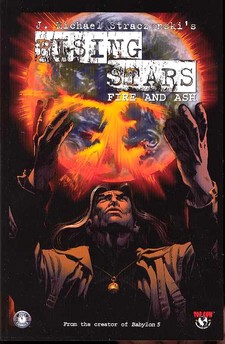
#202 Rising Stars (1999-2005)

Author: J. Michael Stracynski
Title: Rising Stars
Genre: Graphic Novel
Year: 1999-2005
Pages: 600
Nod Rating: 4 out of 5 nods


Rising Stars is a widely renowned comic series written principally by J. Michael Stracynski (he of Babylon 5 fame) and many other talented artists. It comprised 24 issues and was printed between 1999 and 2005, with a delay of 3 years caused by a dispute between the writer and publisher. It deals with the usual fare of the graphic medium: people with superpowers. But Rising Stars is notable for its interesting take on how a world would receive such superheroes.

A brief synopsis, perhaps: during one night a meteor crashes nearby a small town in mid-west America, causing all those in utero at the time to develop superhuman powers as they grow older. There are 113 such “specials”, some of whom have the powers of Superman, whilst others have smaller, rather useless abilities. These range from the usual seen-it-bought-the-Tshirt type skills (a boy who can control fire; someone who can fly; a super-genius) to the unusual (including a girl who appears as the dream woman to whoever locks eyes on her; someone with a telepathic singing voice; and televangelist flying transvestite).

The story is seen in the perspective of one of the specials, Poet, who mourns the death of all the others born with powers. The reader charts the childhood of the group and their growth into adulthood, including many of the problems caused by being different to others. Some fit into society and assume superhero status (such as the police officer Matthew Bright and the costumed Jason Miller), with others becoming criminals or wishing they never had such powers to begin with. It is revealed that the death of one of the 113 results in greater powers for the remaining number, something which is abused by some of the greedy, scheming specials.

The 24 issues cover several larger story arcs, jutting forward many times during the series. The first half is undoubtedly the strongest (including the battle for Chicago between the specials). The second half finds the remaining specials taking an enlightened lead in society, using their powers for the good of mankind; this results in one of them – the Batman wannabe and idealist Ravenshadow - becoming President of the USA. As expected by Poet’s lone existence in the first issue, such efforts come to an end with a wipe-out of the specials; however, to spoil the rather bizarre, cosmic ending would be to do you, the reader, a great disservice.

The series is strongest when concentrating on a particular character for an issue; notably that of Jason Miller’s attempts to rid the world of nuclear arms and the fall-out caused to his young family. And more than the strength of the characters, the idealism of the series is something to behold and applaud. Rather than aim to wow his audience with death-defying stunts and superhero punch-ups, Stracynski sets out to show motivation to build a better world. One of the messages appears to be that we all have it within us to do more to help others and the planet, with or without special powers. When compared to other moronic comic titles, Stracynski deserves a great bundle of credit.

The Worm was pointed into the direction of Rising Stars due to a ‘Thirty Comics to Read’ webpage (http://www.empireonline.com/features/30-comic-books-you-should-have-read/p3). It is a page worth visiting for anyone with more than a fleeting attraction to graphic novels. The idiocy of much of the comic industry will go passed unnoticed; and yet Stracynski’s interesting series will remain.


Buy it here!

Sunday, 10 March 2013

#201 Guns (2013)

Author: Stephen King
Title: Guns
Genre: Kindle Single/ Political Essay
Year: 2013
Pages: 25
Origin: read on the Worm’s Kindle
Nod Rating: 3 nods out of 5


‘In the wake of the Sandy Hook shootings, gun advocates have to ask themselves if their zeal to protect even the outer limits of gun ownership have anything to do with preserving the Second Amendment as a whole, or if it’s just a stubborn desire to hold onto what they have, and to hell with the collateral damage. If that’s the case, let me suggest that fuck you, Jack, I’m okay is not a tenable position, morally speaking.’
Stephen King is known for his stupendously large output of horror fiction. Plenty of his novels and short stories have been transformed into film: including friendship that blossoms in The Shawshank Redemption to the crazed utterances of Jack Torrance in The Shining. Yet in his latest offering – Guns – he takes a different tact. Not the world of fiction, but rather a message and sane voice on the issue of gun control in the United States.

It is the Worm’s first read of a Kindle Single; what is this – not down with the lingo? A Kindle Single is an e-book published through Amazon; taking its name from music singles that are shorter than albums and EPs. It is less than a book, but larger than a magazine article; and all this for the small sum of 99 pence.

During the course of this engaging, extended essay – in what The Guardian deems a ‘passionate, angry essay’ that opens up the question of reform – King puts his distinctive prose to work in the hope of putting to bed some of the myths surrounding the gun control debate. Furthermore, he attempts to do so without resorting to ‘useless screaming’. As a gun owner, he summarises the debate into one central question: should the country introduce greater control or not.

King is a realist, and this is a point he continually hammers home:

‘Let’s talk about reality. The death toll at the Sandy Hook school was 26, and I mourn every one of them, but the number of homicides in Chicago last year exceeded 500. That’s 200 more than the number of American troops killed in Afghanistan during the same period. And let’s remember that our troops volunteered to go in harm’s way. Their bodies come home to parades and flag-draped coffins. The dead of Chicago – 107 of them children, some just waiting to get on the school bus – don’t get the hero treatment, but they are just as dead.’
He pinpoints the plethora of guns being sold every year; in 2012 alone, Californians bought three-quarters of a million rifles and handguns meaning the streets are awash with firearms (‘Honey, that’s a lot of firepower’). He asks just how many guns would a person need for them to feel safe in the home. Furthermore, he questions the idea that owning a gun is enough to be safe, stating the awful example of Herbert Clutter in 1959 who was unable to reach for and use his own firearms when attacked: ‘I guess the question is, how paranoid do you want to be? How many guns does it take to make you feel safe? And how do you simultaneously keep them loaded and close at hand, but still out of the reach of your inquisitive children or grandchildren?’

Also discussed is the case of mistaken intruders, such as that of Desire Miller in 2012 – with hundreds of cases occurring in the past few years. Some of the myths busted include the ludicrous claim that gun control could lead to a dictatorship. This particular point has been seized upon by gun enthusiasts who are always willing to label Obama as either “Communist-in-Chief” or the next Adolf Hitler (without hinting that they realize the patent contradiction). King, seemingly acquainted with the actual events in History, takes exception to this: ‘”Take away the people’s right to bear arms totalitarianism follows!” these Jeremiahs cry. “Look what happened in Germany!” No, no, no, no.’

But King also attacks the position of the media, especially those who finger-point to violent computer games and his own fictional works. He hates the hyped up attention given by news channels: ‘…what cable news does best now begins, and will continue for the next seventy-two hours: the slow and luxurious licking of tears from the faces of the bereaved.’

King’s suggested answers to such killings include the need to limit the amount of ammunition that is available: restricting people from buying thousands of rounds of ammo. He points to the example of Australia, where since the Bryant shootings gun related deaths have decreased by almost 60%. Such statistics show the need for gun control to be the sensible thing; even if the moral thing could be debated. As he notes: ‘You don’t leave a can of gasoline where a boy with firebug tendencies can lay hands on it’

For 99 pence, King’s Guns cannot be disputed. It is especially recommended for those involved in discussing and debate the gun control debate. Hopefully, it can help calm some of those arguments in the hope of reaching a common sense agreement. As for the Worm, he has another Stephen King book on the horizon: The Shining. Whilst the Worm is suitably impressed by the Kindle Single premise to hope that it catches on, bringing across more hard hitting ideas to the public in an accessible format.


Buy it here:
http://www.stephenking.com/promo/guns/

Monday, 25 February 2013

200 Review Milestone


The Four Eyed Book Worm blog has reached two-hundred reviews – a milestone on its never-ending (and of course, unachievable) quest to devour every book in the world. The story began all the way back in the fog of time – or June 2009 to be exact – with the intention of reading as many books as possible, whilst giving some scathing and partisan reviews.

The milestone book review was a rather poor book on the history of football; which recieved one terrible, lonesome and pathetic nod. Not a great book to celebrate this event; but neither was the 100th book review from the Worm: Roy Jenkins’ rather dull memoir Twelve Cities.

Where was the 5 nodder review to spark off the fireworks? Well, as you readers fully well know, the Worm does not give too many of those in the past 200 reviews. In fact, there have been just nineteen 5 nodder reviews out of the two-hundred (accounting for a mere 9.5%). The biggest award has been 3 nods, amounting to 71 reviews (35.5%). Sadly, 2 nodder reviews are also a major player at 52 books read and reviewed, whilst more encouraging is the 4 nodder review on 47 books. Thankfully, 1 nodder reviews are uncommon at 12 in total (less than 6% of all reads). The Worm has been more conscious in recent reading-seasons in avoiding horror reads, and instead concentrating on renowned books and authors. Hopefully, the current season will bring more of the 5 nodder big-hitters.

Non-fiction is the victor, currently accounting for 116 books, in comparison to fiction’s 84 books. The largest particular type/genre is History on 47 books read throughout the past three-and-a-half years; not surprising for a reviewer who graduated within that field. However, the novel is snapping at the heels of the top spot (currently on 43 books read and reviewed). In fact, the novel was the victor in the first book reading season in 2009-10 (18 books to 17 books) and second season in 2010-11 (15 books to 9 books); however, it was truly trumped during 2011-12 with 7 books to 16.

Next on the list are books of the political variety, on a modest 14 books read and reviewed. Others vying for third spot are short fiction/stories (12 books), graphic novels (12 books), and autobiographies (10 books). Looking at the bottom of the barrel include seeming one-offs in the genres of trivia (giving the Worm a few cold shakes), philosophy (moving the Worm to vow to read more in this field), TV & Film as well as genealogy.

Newly bought books (those from Waterstones and which still have that lovely, enticing fresh-book-smell) account for 24% of books read; but they miss out to the big leader: second-hand books at 32%. Nothing can beat the find of the second-hand book, its own story and history from the printing press to become an unwanted, abandoned item on a forgotten shelf: only to return, a phoenix from the flames, to find a home on the Worm’s bookshelves. Tried and trusted library books account for 12.5%; borrowed books from friends and foes 9%, and books given as presents account for 6%. The Worm has not been absent from the technological revolution that surrounds us, with books read on an iPhone accounting for 8% now giving way to a big riser of Kindle read books (5.5%). Another recent development has been the advent of downloaded books, currently at 3%.

Two-hundred reviews down; and many, many more to come. The Worm marches on, as keen as ever before – always in search of the elusive reads that move him to applaud ecstatically and enthusiastically on the web-pages of this blog.


Read End of Season Reviews below:http://4eyedbookworm.blogspot.com/2010/08/worms-yearly-review-2009-2010.html
http://4eyedbookworm.blogspot.com/2011/07/year-in-review-2010-11.html
http://4eyedbookworm.blogspot.co.uk/2012/08/2011-12-season-review.html

And for a blog that celebrates the number 200, look no further:
http://maanumberaday.blogspot.co.uk/2010/05/200.html