Saturday, 30 August 2014

#275 The Secret Garden (1911)

Author: G.K. Chesterton
Title: The Secret Garden
Genre: Short Story
Year: 1911
Pages: 20
Origin: read on the iPhone
Nod Rating: 3 nods out of 5

 
Until relatively recently, the Worm lived on a road named Chesterton Crescent. Other surrounding streets were named Carroll Road and Shakespeare Road, the reasoning here being of honouring writers (of no specific connection with the local area), and of the local city having run out of ideas for new street names.

No matter this, it remains a tribute to the writer G.K. Chesterton. A writer of which the Worm had little knowledge until deciding to read a piece of work in his honour. Not a long read, you understand, but rather a taster of his capability as a writer. Therefore, the rather useful app – Short Stories – came in handy by providing the Worm with The Secret Garden.

This short story is chiefly concerned with the character of Father Brown, a reoccurring person in a lot of Chesterton’s fiction. It is a murder mystery, displaying Chesterton’s ability in creating a well crafted story that did not fail to engage. Rather than discuss plot points, the Worm recommends the link below to be hurriedly clicked and the story consumed.

The Worm has decided on obtaining a few more reads of Chesterton’s hand. Not directly related to The Secret Garden, but more with Chesterton’s biography and great wealth of quotes. Many of these relate to religion and society, but the one that took the Worm’s fancy had a distinctly ordinary and humorous feel to it: ‘Let a man walk ten miles steadily on a hot summer’s day along a dusty English road, and he will soon discover why beer was invented.’ The Worm has since moved from Chesterton’s tribute of a street, but he is glad to have a reflected glory of association with the once world famous writer.

Read it here

Monday, 25 August 2014

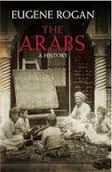
#274 The Arabs: A History (2009)

Author: Eugene Rogan
Title: The Arabs: A History
Genre: History
Year: 2009
Pages: 650
Origin: bought from Waterstones many moons ago
Nod Rating: 4 nods out of 5

 
Book buyers will all know the problem which is encountered from time to time: the book sale. In this instance, the Worm snapped up Eugene Rogan’s history The Arabs whilst greedily engaging in a 3 for 2 offer in Waterstones. However, the book was placed on the “To Read” pile and was promptly forgotten about. Months passed by, soon becoming years, and Rogan’s history gathered dust and yellowed pages. That was until the Worm’s hand, like a beaming light of power, plucked it from the pile and dusted it off for a read.

The Arabs: A History is an ambitious study, charting Arab culture and society across the past five hundred years. It begins with the fighting Mamluks of the early sixteenth century before ending in the turmoil in the Middle East in the early twenty-first century. Heavy concentration is given to the past two hundred years, including the rule of Muhammad Ali in Egypt, and more notably in the twentieth century. This covers the hold over the people by foreign empires – the British and French – and their replacement by a new kind of world politics: the Cold War. The period 1950 to 1990 is given high priority, with Rogan describing and analysing the rise of Arab nationalism and the new importance of oil and how it has shaped their relations with the western world.

Such a task – of charting a history both rich and divisive – seems a tall one to accomplish. However, throughout the read Rogan is an able pair of hands, guiding the reader through the tough differences and the shocking lows. A key feature of the narrative is the meddling of foreign hands into the affairs of the Arabs, including the Ottoman Turks and the western powers. The foundation of the Israeli state, by the power of these western powers, has created a smouldering sore in the region for the past seventy years. The legacy of this is clearly seen today, with the region of the Middle East and northern Africa in turmoil.

More so than a history of any other peoples on this planet, no history of the Middle East can definitely end. The scant five years since the publishing of Rogan’s book have seen the Arab Spring and several revolutions, altering the balance within the region and putting into question the future ahead.

However, such events cannot dismiss the high standard of work: painstaking research and a wonderful ability to write engaging prose. All of which gains Rogan’s book a positive 4 nods. Its failing is in its balance of material; can any history be definitive by neglecting the previous century of history before the sixteenth century? The Worm believes the answer is a firm “no”. But he urges anyone with an interest in the Middle East to pick up a book and dive right in.


Read more here

Friday, 22 August 2014

#273 MaddAddam (2013)

Author: Margaret Atwood
Title: MaddAddam
Genre: Novel – Speculative Fiction
Year: 2013
Pages: 350
Origin: read on the Kindle
Nod Rating: 3 nods out of 5

 
MaddAddam is the third in the trilogy of novels from acclaimed and engaging writer Margret Atwood. The beginnings are found in the novel Oryx and Crake, later followed up in The Year of the Flood. Both novels have been reviewed in this blog and received different verdicts. Oryx and Crake received 4 nods and was catapulted into the Top Ten reads of the year list, whilst The Year of the Flood failed to recapture the mood and was awarded a lowly 2 nods. What nod rating, then, the final in the series?

The novel is more closely linked to The Year of the Flood than Oryx and Crake, but yet it resolves issues resulting from both books. However, rather than follow the story of Jimmy/Snowman, it is closely linked to characters created in The Year of the Flood. For fans of the initial novel – like the Worm – this is an unwelcome development. Less enthusiastic and well-rounded characters are charted, principally that of Toby and the background of Zeb. However, once Atwood has finished tying up loose ends, the second half of the novel picks up pace, before concluding in action packed frenzy.

Of particular interest is Atwood’s narrative voices, as experimented with in the previous novels. There is first person perspective, as well as third-person narrative. Furthermore, the Crakers also develop their own voice within the novel, particularly in Blackbeard’s narration of the climatic shoot-out that displays Atwood’s imagination. This ties in with the trilogy’s conclusion, with the Crakers finding their own, firm footing in the post-apocalyptic world.

From a story-line perspective the trilogy is unnecessary. Oryx and Crake works suitably as a standalone novel, and remains the strongest of the three novels; the questions that are posed at the end of the read may have had greater effect if left alone. However, Atwood shows confidence in returning to the world set up in Oryx and Crake, considerably expanding it in the two subsequent books. The resulting characters are not as well defined, but the land of the Crakers offers engaging subject material for any real fan of speculative fiction to thoroughly enjoy.

As such, the Worm gives MaddAddam a healthy 3 nods. Furthermore, the Worm provides The Year of the Flood an additional nod, now taking into account the fact that it was a stepping-stone in Atwood’s grander plan of the trilogy. Such an outlay of nods gives Margaret Atwood an overall total of 10 Worm nods, putting her into the Double-Digit Club. One for is for sure, it will not the final limit, with the Worm planning to read more Atwood novels in the not so distant future.

 
Click to read the Worm's reviews of  Oryx and Crake and The Year of the Flood. And read more about the MaddAddam trilogy here

Tuesday, 19 August 2014

Film Adaptation News: The Sound and the Fury


As faithful followers of this blog should know by now, the Worm has an intense affection for the William Faulkner novel The Sound and the Fury. Not only did he review it some three book-reading seasons ago, and not only did it win the (slightly) prestigious Read of the Year award, but the Worm gave it the singular honour of being the only book reviewed twice on the pages of this very blog. Therefore, it has been with trepidation that the Worm has received the news of a modern day film adaptation of the book.

The person at the helm of this project is James Franco. Okay, not so alarming. But also appearing are Franco’s comedy-buddies: Seth Rogan and Danny McBride. Now the alarm bells ring. Pineapple Express 2? With news that both Rogan’s and McBride’s roles are “cameos” should soften the blow somewhat. However, there is the possible annoyance that one of the major roles is to be filled by Franco's younger, less-talented, more-annoying brother (watch one of the final painful episodes of Scrubs for evidence).

Of greater concern is Franco’s own role: that of Benji Compson. Any reader of the novel may have concocted an image of a larger male in the role. Whilst readers and fans of the novel will be aware that large chunks of the text is completely un-relatable to the movie screen, due to the vast time shifts within the heads of the central characters (particularly Benji and Quentin).

Is this Franco’s shot at Oscar fame, ala Forrest Gump – or, as is more likely, a bomb at the box-office? The Worm reserves his judgment until watching the movie. But he holds little hope for what has been proclaimed an un-filmable (in some cases, unreadable!) novel. Good luck, Franco. You’ll need it!

Read up on Franco's movie here

Read the Worm's previous reviews of this fantastic novel here and here

Thursday, 14 August 2014

#272 America, Empire of Liberty (2009)

Author: David Reynolds
Title: America, Empire of Liberty: A New History
Genre: History
Year: 2009
Pages: 600
Origin: a borrowed read
Nod Rating: 4 nods out of 5

 
David Reynolds has made an accomplished career as an historian of the English speaking world, principally in the relationship between England the United States of America. Therefore, it is suitable that his book on American history sold by the bucket-load and received wide critical acclaim.

America, Empire of Liberty is billed as ‘a new history’. Yes, every new history book is generally a new interpretation of the past (bar all of those terrible Kindle historical reads that seem to proliferate like a disease), and it is interesting to read Reynolds' narrative. He highlights three key themes that are continually referred to throughout the book: Empire, Liberty and Faith. Empire connects with the formation of America (from Britain’s own empire), its conquering of the American continent, the belief in Manifest Destiny and its flexing of muscles on the world stage. The second theme Liberty refers to America’s awakening in the revolution against Britain, its adherence to a constitution, and its beacon status to the rest of the democratic world (as well as the charge of hypocrisy thrown at its door in the past century). Faith – the least interesting of the three – charts the various religious groups and dimensions that flocked to America to escape persecution, before helping shape the American dimension to the present day.

In many ways the book treads familiar ground, examining key points in American history: yes, the revolution, the Civil War, American’s expansion in foreign policy, the civil rights movement, and the Cold War. But throughout all of this Reynolds poses contradictory views in his chapters, such as ‘Slave or Free?’, ‘War and Peace’, and ‘Pride and Prejudice’. Furthermore, it is of interest in the shaping of the American presence or character, defined by these external forces and polar opposites, seen no more clearly than in America’s challenge to Soviet Russia in the second half of the twentieth century.

Reynolds writes in a clear and entertaining manner, making this read – without a doubt – one of the Worm’s most pleasurable experiences within the History field during the past year. New ground is not chartered, but in terms of American history “new” cannot be found in such an overwhelming environment of historical research. New interpretations, however, are always welcome. As such, Reynolds gains 4 golden nods from the Worm.


Listen to the Radio 4 series here

Wednesday, 13 August 2014

Tweets Ahoy!


The Four Eyed Book Worm has decided to take his partisan and belittling reviews across to the land of Twitter. Of course, this is not to say that he will be abandoning his much cherished blog, but rather that he wishes to promote the blog to others.

Therefore, a new Twitter home is available for anyone who wishes to see it: @foureydbookworm

Yes, an 'e' is missing, the Worm is very much aware! Furthermore, there is also an updated email address (available in the 'About the Worm' page).

The Worm wishes to see you bloggers on the other side!

Monday, 11 August 2014

#271 The End of History? (1989)

Author: Francis Fukuyama
Title: The End of History?
Genre: Essay
Year: 1989
Pages: 20
Origin: read on the Kindle
Nod Rating: 3 nods out of 5


‘IN WATCHING the flow of events over the past decade or so, it is hard to avoid the feeling that something very fundamental has happened in world history. The past year has seen a flood of articles commemorating the end of the Cold War, and the fact that "peace" seems to be breaking out in many regions of the world. Most of these analyses lack any larger conceptual framework for distinguishing between what is essential and what is contingent or accidental in world history, and are predictably superficial. If Mr. Gorbachev were ousted from the Kremlin or a new Ayatollah proclaimed the millennium from a desolate Middle Eastern capital, these same commentators would scramble to announce the rebirth of a new era of conflict.’


So writes Francis Fukuyama. As the Cold War came to an end the old certainties were being bulldozed down. A new world had come into being, with the former ideas – political and social – being swept away. These vast changes led Francis Fukuyama to pen an influential essay, The End of History?.

Fukuyama’s essential point is that with the collapse of the Soviet Union has come the overwhelming triumph of liberal ideals, principally from the western democracies (USA and western Europe). He argues that these ideals indicate an end point of humanity’s progress and evolution, from ancient civilisation, across the feudalism of medieval times, towards the capitalism employed today. As he states:

‘What we may be witnessing is not just the end of the Cold War, or the passing of a particular period of post-war history, but the end of history as such: that is, the end point of mankind’s ideological evolution and the universalisation of Western liberal democracy as the final form of human government.’


Gone, then, is communism, socialism and other theories. But, how well as Fukuyama’s essay held up over the past quarter of a century? Clearly, western liberal ideals remain dominant. Testament to this is the continuing superpower status of the United States of America, as well as the rapid growth of the European Union. But then again, cracks are apparent, particularly in the form of the current banking crisis. Furthermore, other ideals have taken a sharp focus, principally that of Islamic fundamentalism. Also, recent developments – such as the Russian seizure of Ukraninan land – flies in the face of the western democratic style. And this is without mentioning the new superpower, China, and how this will shape political relations in the decades ahead.

Of most striking note is the central belief that history never ends; history is spewed forth in a multitidue of events every single day. Fukuyama’s central argument that western liberal values indicate the end point of human development is a stunted one, especially when one considers the vast changes that have occurred in the last two hundreds alone, let alone the past thousand. The twenty-first century promises to bring more changes with it, especially within the sphere of technology. Political situations will continue to change and history will never end. But historical theories and statements – however odd and misguided (of which Fukuyama’s is not) – will continue to be spouted off by commentators and historians.


Read it here

Saturday, 9 August 2014

#270 The Honicknowle Book of the Dead (2009)

Author: Kenny Knight
Title: The Honicknowle Book of the Dead
Genre: Poetry
Year: 2009
Pages: 100
Origin: bought from the library for 50p
Nod Rating: 2 nods out of 5

 
The Worm first read about this intriguing book in a local paper a few years ago; the Worm was especially thankful for Kenny Knight referencing the interesting Lobsang Rampa. So, when a copy was stumbled on in a library book sale, fifty pence was eagerly parted with in order to obtain it. It held a particular fascination with the Worm due to the local dimension, especially with the area of Honicknowle residing within the Worm’s hometown.

Kenny Knight is a poet of talent, and for the first third of this book he held the Worm’s attentions. The local aspect was trumpeted up with the connection of memory, rock and roll and the monarchy; the childhood of the poet was brought to life in a surreal manner. However, when the collection of poems failed to expand from this premise it became a dull and incredibly self-involved read. The narrative kept repeating the same old themes and ideas, especially the referencing of The Honicknowle Book of the Dead time and again!

“Yes,” you may say, “of course poets are self-involved! That is the very nature of their work and it springs forward truth and honesty.” That may be true, but at least new ideas need to be explored. As it stands, The Honicknowle Book of the Dead may have served better as a longer, single poem. However, the Worm is still thankful for the poet bringing forth the history of Lobsang Rampa. If you do not know this person, please use Wikipedia immediately.

Wednesday, 6 August 2014

#269 Preacher (1995-2000)

Author: Garth Ennis & Steve Dillon
Title: Preacher
Genre: Graphic Novel
Year: 1995-2000
Pages: 1,800 (in total)
Origin: read on the iPad
Nod Rating: 4 nods out of 5


Tulip: The way I hear it, there's two good places to look for God: in church, or at the bottom of a bottle.

Jesse: Maybe I'll go find a liquor store, then … 'cause lemme tell you, it sure as hell ain't church.

Since making waves in the 1990s, Preacher has gathered critical acclaim. The original run of Preacher spread across sixty-six issues released between 1995 and 2000. In recent years these issues have been published in nine collected books, of which the Worm read over a series of months. The reader follows Jesse Custer after he becomes possessed by a supernatural force that gives him with great powers, leading him to search for God in order to have a few questions answered. Throughout the run of issues Jesse Custer gets into a suitable set of adventures to thrill the everyman comic reader.

Undoubtedly, Ennis has created some fantastic characters. The main trio – Jesse, Tulip and Cassidy – loosely echo that golden triumvirate from Star Wars. Jesse is searching throughout the issues to find himself (as well as God), Tulip is an ex-hitman who has the effect of making all men drool after all, whilst Cassidy is an Irish vampire (what more is there to say!). Furthermore, villains include the undead cowboy Saint of Killers and the unfortunate and angered Herr Starr, whilst the famous Arseface makes consistent appearances throughout the run.

The storyline leans on the conspiracy theories of the Holy Grail (which provide some humorous villains), the legend of westerns, as well as religious theory. Ennis has created an interesting blend of action, humour and serious commentary in the form of this comic. However, it is unfortunate that the run seemed to lose momentum half-way through. Perhaps it moved beyond its initial remit and attempted to expand into areas into which it lacked the same high standard of the original stories. Of greater annoyance was Ennis’ intrusion – in the form of Jesse – to voice his concerns of the world. In the beginning these monologues were fresh, but by the end they became stale and tedious. Similarly, giving off wafts of staleness was the love affair between Jesse and Tulip. The storyline in which Jesse goes it alone and becomes a sheriff was a very welcome distraction.

The Worm “ummmed” and “aaahed” about the nod rating for Preacher. 3 nods would be more suitable in reflecting the second-half of the run. However, it made a fresh entrance into the comic-reading community and sustained interest over a period of years. For this reason, 4 nods are given. There has been a lot of talk of Preacher being converted into a TV show or movie series; the Worm is interested in seeing how this comic is adapted. But for those waiting, better to gain hold of the original books and get started right away.


Read about the writer Garth Ennis here

Thursday, 31 July 2014

#268 A Brief History of the English Reformation (2012)

Author: Derek Wilson
Title: A Brief History of the English Reformation
Genre: History
Year: 2012
Pages: 440
Origin: bought from the Works for £3.99
Nod Rating: 3 nods out of 5

 
This title is somewhat misleading. After all, what is “brief” in more than four-hundred pages of reading? Derek Wilson’s history of the English Reformation is incredibly detailed and well-researched, leaving the Worm satisfied of this choice of book from the discount store The Works.

However, the book does not fit the entirety of the English Reformation, tending to a particular focus on the Tudor monarchs of the sixteenth century. The Stuart monarchs and their equally immense problems (Civil War, religious upheaval, monarchs on the run!) are ignored, although Wilson addresses this issue in the book’s epilogue. Wilson’s key focus is in an attempt to show how England was transformed by the whims and tastes of the Tudor dynasty, by Henry VIII and his daughter by Anne Boleyn, Elizabeth.

The historian does an admirable job of putting in the essential events – along with analysis and historical assessment – alongside some interesting minor detail. He has a clear understanding of the major players and their motivations. A narrative is held onto, but it lacks greater depth. Yes, you declare aloud right now, but remember Mr. Worm, this is a “brief” history. Perhaps the remit was never there to dig deeper, but also recall yourselves that in four-hundred pages ample space was provided.

For anyone wanting to know more about the English Reformation in the Tudor period, Derek Wilson’s book is warmly recommended. Get down to the Works now, there might still be a cheap copy going!


Find out more about the historian here

Tuesday, 29 July 2014

#267 Doctor Sleep (2013)

Author: Stephen King
Title: Doctor Sleep
Genre: Novel
Year: 2013
Pages: 500
Origin: read on the Kindle
Nod Rating: 2 nods out of 5

 
‘The shining was back, and strong. The question was, why now?’

Back in 2013 the Worm read Stephen King’s novel The Shining. Having grown up with the impressive Stanley Kubrick film, the novel offered a different interpretation on the story (King’s definitive version, it could be said). The Worm wanted to know what happened after the final scenes; in particular, what happened to little Danny Torrance. So, the author’s follow-up to the novel – more than three decades later – promised to be an interesting one.

Doctor Sleep shows us an adult Danny (now named Dan) who has come to terms with the demons in his life, both mentally and physically in the form of the Overlook Hotel as well as his alcoholism. ‘You take yourself with you, wherever you go,’ King writes. Dan befriends a girl – Abra – who displays the gift of the shining to a greater extent than himself. However, Abra unwittingly invites the attentions of the True Knot, an odd gang who travel across America looking for kids who have the shining in order to feed off their energy. As King writes, ‘America is a living body, the highways are its arteries and the True Knot slips along them like a silent virus’. Dan Torrance becomes involved with defending Abra, leading him back to the grounds of the Overlook Hotel.

All of this sounds like positive sparks ready to explore. However, the experience of reading this overly long novel was a different one that the synopsis suggests. Some of the Worm’s chief complaints include pacing issues (a drawn out introduction and not enough time given to the book’s climax at the Overlook), tiresome action scenes, as well as some incredibly dull characters. Furthermore, the characters who could have injected a bit of energy into this novel – those of the True Knot – were completely underused. This includes the character of Andi who was given attention in the beginning, and then neglected for the remainder of the novel.

The biggest complaint comes in the form of King’s fairly standard writing. This is regrettable to say, as the Worm has long been a fan of Stephen King (in particular many of his short stories). However, Doctor Sleep lacks spark and imagination. Rather than suspense, it plodded along in a harmless manner.

Although it was nice to check in on Danny after decades of the original novel, Doctor Sleep is - like the horrors of the Overlook Hotel - best left alone. It adds nothing new to the myth of “the shining”, and is a wasted opportunity to really explore the meaning behind the apparent gift. The Worm will return to Stephen King in the future, but he may just stay away from his recent publications.

Sunday, 27 July 2014

#266 Ant-Man: Season One (2012)

Author: Tom Defalco & Horacio Dominques
Title: Ant-Man: Season One
Genre: Graphic Novel
Year: 2012
Pages: 130
Origin: read on the iPad
Nod Rating: 1 nod out of 5

 
The Worm is a fan of the Marvel Cinematic Universe series of movies recently released. Using less heavily induced nerd-language, this basically means the many hero action movies spewed out into cinemas over the past few years. Yes, you know the names by now: Iron Man, Captain America, Hulk and even the mighty Thor. But in 2015 there will be a new hero in town: Ant-Man.

Ant-Man doesn’t have quite the same attraction to it as perhaps Batman does. However, the Worm was intrigued by the film and its creative force of Edgar Wright (he who directed the “Cornetto” trilogy of British films alongside Simon Pegg). It led the Worm to attempt a read into the back-story of Ant-Man, and where better than Ant-Man: Season One.

Well, it would appear, there are many better places to start. The reader follows Dr Hank Pym as he discovers the power to reduce and increase his size, as well as communicate with ants. Unfortunately, this story offers little to stoke up the interest in the casual reader, resulting in a lack of depth. The art-work is acceptable enough, but in a market that has strengthened with serious writers and artists, this particular offering appears to be nothing more than yet another cash-in for the Marvel brand.

All of which is a shame, as the Worm wished to delve into this character before next year’s movie was released. But just as the read was finished the news was announced that Wright was to be leaving the production; the Worm’s interest soon waned in the whole operation. He leaves this review providing 1 nod for a basic story that appears rushed and unloved. The Worm hopes that 2015’s movie will fare better.


Saturday, 26 July 2014

#265 Fifty Shades of Lady Catherine Grey (2013)

Author: T.S. Wiseman
Title: Fifty Shades of Lady Catherine Grey: The sex scandals that shook the Tudor court
Genre: History(ish!)
Year: 2013
Pages: 40
Origin: read on the Kindle
Nod Rating: 1 nod out of 5

 
As can be instantly deduced from the title of this book, Wiseman's book is a shameless cash-in on a current “literary” fad that isn’t about much at all. The Worm spent ninety-nine pence in the hope that it would add a few interesting perspectives into the scandals that troubled the Tudor court in the sixteenth century. However, all he got in return was a dull read that added nothing new to his own knowledge.

This is all with great regret, because Catherine Grey – as do her two sisters – has a fascinating history that provides a deeply rich subplot to the main Tudor queens, Mary and Elizabeth. However, it appears that T.S. Wiseman saw fit to gloss over most of the good stuff. It is with further regret that this author has put out more material on this period of his history. If the Kindle brought about a revolution in the publication of ideas from authors all over the world, this kind of book is the shoddy distaste that we have to accept along with the good.

Yes, and the Worm is still bitter about his ninety-nine pence. Wasted! Squandered! Never to be seen again!

Wednesday, 23 July 2014

#264 The Secret Agent (1907)

Author: Joseph Conrad
Title: The Secret Agent: A Simple Tale
Genre: Novel
Year: 1907
Pages: 200
Origin: read on the Kindle
Nod Rating: 4 nods out of 5

 
Long-term readers of this blog (yes, poor you) may recall the Worm feasting on Conrad’s novel Lord Jim five years ago. He ecstatically gave it 5 nods and vowed to read much more from Conrad’s catalogue in the immediate future. Well, this never happened. But the Worm plucked up the courage to delve further into the cannon, with The Secret Agent offering a nice reintroduction.

The Secret Agent was chosen principally because it avoided the usual seafaring theme so well loved by Conrad during both his writing career and previous jobs working at sea. The novel is set in Victorian London, concerning the activities of Mr Verloc, we follow him as he juggles life as a businessman in a bric-a-brac shop as well as a spy. He is used as an agent by an ambassador of a foreign country; his mission is to destroy the Greenwich Observatory in order to shake up the British establishment in order to make them act on the dangers of anarchism.

Like many great ideas, it is based on a true life incident from the 1890s. Conrad was able to use it to delve into the world of terrorism and discuss big, weighty political themes. Mostly, such comments are within the sarcastic and critical vein: ‘the majority of revolutionaries are the enemies of discipline and fatigue mostly’. However, the real charm in The Secret Agent lies in the human relationships of Verloc, his wife (Winnie), and his brother-in-law, the poor unsuspecting Stevie. The relationship between the trio is an uneasy one, with Conrad noting the dynamic: ‘Mr Verloc extended as much recognition to Stevie as a man not particularly fond of animals may give to his wife’s beloved cat; and this recognition, benevolent and perfunctory, was essentially of the same quality’.

Verloc abuses the trust that Stevie places in him – Winnie notes how her brother ‘would go through fire’ for her husband - in order to set off the bomb. However, it all goes wrong, with Stevie being killed in the process; a police-officer in the novel describes the scene: ‘Blown to small bits: limbs, gravel, clothing, bones, splinters – all mixed up together. I tell you they had to fetch a shovel to gather him up with’. Other characters are introduced, including subplots involving anarchists and police detectives, all before the novel culminates in Winnie’s stabbing of her husband in a fantastically executed eleventh chapter. Like the ticking of a bomb, Winnie’s head climaxes: ‘Mrs Verloc’s whole being was racked by that inconclusive and maddening thought. It was in her veins, in her bones, in the roots of her hair’.

However, being Conrad, the narrative is not as straight-forward as the Worm lets on. There are various time shifts, meaning that this relatively “simple tale” is partially obscured. Furthermore, the lack of redemption, as well as the concluding lines of the final newspaper report – ‘an impenetrable mystery seems destined to hang for ever over this act of madness of despair’ – show Conrad at his teasingly best. But yet, in comparison to other novels – notably Lord Jim and Heart of Darkness – Conrad’s The Secret Agent fails to stand as tall. The characters are not as developed, and the plot is ultimately a basic one. Therefore, it displays a functioning – if engaging – novel at the hands of a very talented writer.
 
Read it here

Monday, 14 July 2014

#263 Into the Silent Land (2004)

Author: Paul Broks
Title: Into the Silent Land: Travels in Neuropsychology
Genre: A bit of Psychology and Philosophy
Year: 2004
Pages: 230
Origin: borrowed from a library
Nod Rating: 4 nods out of 5

 
Remember me when I am gone away,
Gone far away into the silent land;
When you can no more hold me by the hand,
Nor I half turn to go yet turning stay.
(Christina Rossetti, ‘Remember’)

Into the Silent Land became one of those lucky reads, found on a book shelf in a library whilst waiting photocopying to complete. The Worm browsed a shelf in the Psychology section, more as a way of killing time, before stumbling upon this interesting title. A couple of minutes of thumbing through the pages convinced him that it must be taken at once! The Worm grabbed the book and photocopy pile, punched his way through a barrage of librarians, all before jumping out of the second floor window onto the ground. Yes, nothing can escape the desires of the Worm!

And so, back to reality, later that day the Worm started tucking into Paul Broks’ gripping book. Based on his own experiences in neuropsychology, Broks examines what it is to be human. The brain is the base for this study, with Broks speculating on where the human resides; if a piece of brain is removed, is a piece of the human – their soul, so to speak – also removed? In this interesting manner, Broks flirts with both his discipline as well as philosophical arguments. It is this way, he speculates, in which greater understanding could ensue, not simply treating ‘the brain as an isolated object’.

Broks prods and pokes away at this idea throughout the book: ‘Where is the mind in this tangled wood of neurons and nerve fibres? It isn’t anywhere. And the self? What did you expect? A genie in a bottle?’ He describes and evaluates his own observations of the past of people who have coped with losing a part of their brain and how they have changed in consequence, as well as witnessing others who have undergone experiments in losing function in a part of their brain: ‘A person? A half-person? Half a brain?’

The book is a mixture of past experience, philosophical discussion, as well as fictional stories to illustrate key points. Brok’s tells a story of a distant future in which Star Trek teleportation is possible; a problem in the transport results in two Dereks. The one who successfully teleported, and the other who remained behind. But which is the real Derek? Broks moves deeper into a fictional dialogue between himself and the other. Throughout the book these conversations interrupt the pages, with Brok’s using the device to develop essential points in a clearer, more direct way. Furthermore, he also connects with poetry and his own literary experiences, particularly in the use of the Dannie Abse poem ‘In the Theatre’. Such touches are engaging, as well as highlighting the harrowing idea of what makes a person.

Broks’ attempts to tie in together both brain – as a scientific object – and the human self – as a social construct. He believes that this is the ‘challenge for neuroscience’ in the future. Such a bridge is attempted in these pages, however, there is no satisfactory resolution. There remains an itch for more answers… or is this perhaps an itch to read more into this fascinating field? Either way, Broks has succeeded in penning a lively and engaging book, fully deserving of anyone’s attention. Now, if you will excuse the Worm, he has a library book to return.


Read more here

Sunday, 22 June 2014

#262 A Tale of Two Cities (1859)

Author: Charles Dickens
Title: A Tale of Two Cities
Genre: Novel
Year: 1859
Pages: 300
Origin: read on the Kindle
Nod Rating: 5 nods out of 5

 
‘It was the best of times, it was the worst of times.’ A few simple words, and yet they remain enduringly famous as one of the most memorable opening lines to a novel:

‘It was the best of times, it was the worst of times, it was the age of wisdom, it was the age of foolishness, it was the epoch of belief, it was the epoch of belief, it was the epoch of incredulity, it was the season of Light, it was the season of Darkness, it was the spring of hope, it was the winter of despair.’

 
These very words – as well as the French Revolution historical setting – drew the Worm back to another foray into the world of Dickens. Recent reads in the past five book reading seasons have included the equally excellent Hard Times and David Copperfield. What would A Tale of Two Cities have to offer?

Set over a period of years, the book is set during the French Revolution era; the two cities under consideration are that of London and Paris. In London Lucie Manette is reintroduced to her father, Dr Manette, and in time she marries the son of a French aristocrat, Charles Darnay. Also in love with Lucie is the cad Sydney Carton, who remains distant despite becoming a family friend. The novel gathers pace and shape after the fall of the Bastille in 1789; as Carton states: ‘this is a desperate time, when desperate games are played for desperate stakes.’ Darnay returns to his homeland in order to help a former servant, and in doing so he is imprisoned as an enemy of the people. The Manettes attempt to help Darnay, yet their attempts are not entirely successful, with Darnay facing the guillotine. In an attempt to help the Manettes, Carton nobly changes places with Darnay and faces death at the novel’s end.

Dickens focuses on a couple of key themes: death and resurrection (particularly with the first book being named ‘Recalled to Life’), the right and wrong of the law, as well as the idea of love conquering all. Due to the weighty themes there is a noticeable lack of humour, however, the usual Dickensian wit is present: ‘Tellson’s was the triumphant perfection of inconvenience’, and regarding the guillotine: ‘it was the best cure for a headache.’

The novel reaches a dramatic highpoint which differentiates it from other reads, principally that of David Copperfield. Rather than drawing out a meandering plot for hundreds of (unneeded) pages, A Tale of Two Cities is precise in its intentions and execution. Plot is of higher importance, rather than the characters of which Dickens is so well – and justly – famed. Perhaps it is because of this, rather than the “serious” nature of the novel, as to why A Tale of Two Cities stands out in the back catalogue of Dickens’ works. It obtains the maximum 5 nods from this reviewer, the same reviewer who now doubts that it will be bettered when he next returns to Dickens in the year ahead.

 
Read it here
 

Monday, 16 June 2014

#261 From Hell (1999)

Author: Alan Moore & Eddie Campbell
Title: From Hell [Collected Edition]
Genre: Graphic Novel
Year: 1999
Pages: 550
Origin: borrowed and enjoyed
Nod Rating: 4 nods out of 5

 
The Worm’s initial meeting with From Hell was in the form of the Johnny Depp movie from 2001. The film was terrible. The less said the better. Fast-forward a decade and the Worm’s current (seeming) fixation on Alan Moore led him to the original graphic novel version. Published in sporadic serial form over a 7 year period, between 1989 to 1996, the novel focuses on the Jack Ripper murders of Victorian London.

Yes, Jack-the-bloody-Ripper. A seemingly ever-enduring and popular legend. This is just the reason that Moore has picked such a theme, developing and elaborating on various conspiracy theories involving the birth of an illegitimate royal baby. Prince Eddy – the Duke of Clarence – fathers a child with a commoner, Annie Crook. When Queen Victoria becomes involved the decision is made to “correct” Annie with the help of William Gull who damages her thyroid gland, whilst the baby is secretly taken to Annie’s parents. The plot thickens when Annie’s friends – a group of prostitutes – become aware of the scandal and attempt to blackmail those involved. Ever the trusty right-hand man, Gull is sent to deal with the women: one by one they meet a grisly end, thereby giving the genesis of the Jack the Ripper alias.

Gull is an intriguing character. Much time is spent developing his story, from childhood, as well as a deep exploration of his links to Freemasonry. Within Gull the writer Moore hints on the connections within time (the supposed “fourth dimension”) with everything in a specific order, with links made to other murders and crimes committed in later years, such as the Sutcliffe murders. Moore hints at this throughout the various chapters, particularly in Gull’s experiences of witnessing modern-day life (such as peering in at a television set in a Victorian alley-way, as well as appearing in a modern office furnished with computers). The horrors of later days to come were prefigured in the Ripper murders: “For better or worse, the twentieth century. I have delivered it.” Gull delivers to a speech to the twentieth-century office workers:

“With all your shimmering numbers and your lights, think not to be inured to history. Its black root succours you. It is inside you. Are you asleep to it, that cannot feel its breath upon your neck, nor see what soaks its cuffs? See me! Wake up and look upon me! I am come amongst you. I am with you always!”


Interestingly, Moore links both murderer and murdered into the same boat, yearned and desired after by later generations: “Ah, Mary, how time’s levelled us. We are made equal, both of mere curios of our vanished epoch in this lustless world.” Yes, Jack-the-bloody-Ripper, perfect fodder for Moore to make a point about the passages of time.

The wealth of research into the period, theories and historical characters is clear to be seen (as testified by the various notes and references made available in the collected edition). Victorian London is brought life, with Moore unable to bring in a few notable – but pointless – connections, such as the Elephant Man. However, other central characters – such as the “physic” Robert James Lees and the police-inspector Abberline – are more well-rounded.

The artwork has none of the razzmatazz expect of modern day comic books.  Printed in black and white, it adheres to a structure of nine panels on every page (aside from a few deviations). But the story is so much greater than the artwork alone, and despite being slightly dense and inaccessible in parts, From Hell is a considerable work. Particularly within the graphic novel field, packed as it is with pointless and faceless superheroes who continually save the world in an empty and unsatisfying manner. As such, the Worm heartedly endorses it to the level of 4 nods out of 5. This is a must-read for any fan of Moore’s work.

Saturday, 7 June 2014

#260 Leaves of Grass (1892)

Author: Walt Whitman
Title: Leaves of Grass (Deathbed Edition)
Genre: Poetry
Year: 1892
Pages: 400
Origin: read on the iPad
Nod Rating: 2 nods out of 5


For a long time Leaves of Grass has held a fascination with the Worm. A seeming modest collection of poems, the book has a long list of admirers from its initial date of publication to the present day. The Worm has gazed at various publications of the collection in many book-shops, always wondering whether or not to take the plunge. Such is Whitman’s association with America – and late nineteenth-century American history – that the Worm was scared off due to not knowing enough about the period to really savour and enjoy his supposed talent for stringing words together.

The Worm was able to download Leaves of Grass recently. However, unfortunately for him, it was not the modest volume thumbed on many a book-case, but rather the final edition of Whitman’s collection. Due to spending the bulk of his life revising and rewriting his initial publication from 1855, the final “death-bed” edition of Leaves of Grass runs to over four-hundred poems.

Ah, the Worm hears you say, quality and quantity: what a rare treat. Indeed, dear reader, both of those Qs together is a rare treat. But such a treat is not to be found within the pages of Walt Whitman’s Leaves of Grass. Allow the Worm to explain why…

Firstly, the scope of this collection of poems is too vast to be about anything in particular. A short volume is succinct and allows the writer and poet to express their thoughts and feelings on a subject. But four hundred poems? Why does Whitman need four hundred poems to say what other poets could say in ten? Whitman attempts to encompass as much as possible about American culture as it then stood in the late-nineteenth century. However, by doing this he runs the risk of becoming all sound and fury, signifying nothing.

Whitman’s tool for attempting to cover everything: listing. This is a technique used in order to outline basic information. Whitman uses it – armed with the almighty comma – as a poetry technique. We’re given a list on the American vastness, on its people, on its past, on its potential, the paving-man, the canal boy, the conductor, the child, the regatta, the drover, the peddler, the bride, the opium-eater, the prostitute, the crowd, the President: list, list, list! Rather than poetry it reads like a sermon, a Bible of lists of America.

This “listing” technique is further exacerbated by the lack of any rhyme or meter. Words are chucked together, with no regard for length, structure, or fluidity. Whitman continues to rewrite throughout his life, but seemingly, he does not edit. More words and piled on top of one another, forever hoping to get to the heart of the matter in what he truly means to say. But despite the words stacking up, true meaning seems to elude him. Rather than take a step back to think about such meaning Whitman continues to scoop on the words, one after the over, until us – the readers – have our bellies filled with sickly prose.

Now, such words appear to be harsh. They are meant to be harsh. However, the Worm did manage to enjoy or poem or two of this ridiculously massive collection. There are lines to be enjoyed: ‘Who goes there? Hankering, gross, mystical, nude; How is it I extract strength from the beef I eat?’ Regrettably, such lines are hemmed within a sea of merciless listing.

Before his death, Whitman noted how he wished for the final “death-bed” edition to supersede all previous ones. The next time the Worm touches Whitman it will be the first edition of Leaves of Grass only. Life is far too short to wade through the listing that Whitman should be – but seemingly isn’t - infamous for. But such is Whitman’s legend and hold over the United States of America, the Worm is not holding out for such a critique to gain any foundation.
 
Read all about it here

Sunday, 1 June 2014

#259 Tudor Cornwall (1941)

Author: A.L. Rowse
Title: Tudor Cornwall
Genre: Local History
Year: 1941
Pages: 450
Origin: bought from Waterstone’s many moons ago
Nod Rating: 4 nods out of 5

 
It has been a while since the Worm returned to one of his favourite reading pursuits: the history of that most beloved of duchies/counties/countries (delete as your politics dictates): Cornwall. And what better historian to reacquaint the Worm with such history than the cantankerous A.L. Rowse? Rowse’s name is well established with the Tudor period, particularly in his scholarship on Shakespearian works. However, Cornwall is his place of birth, and Tudor Cornwall holds an esteemed reputation with Cornish historians the world over.

Rowse traces history from the lawless time of the Wars of the Roses in the late fifteenth century, the arrival of the Tudor dynasty, the turmoil under various rulers – principally that of Henry VIII – and the later focus on the trusty Elizabethan sea-dogs and the war with the super-power Spain. Due to such illustrious characters during this period, as well as the great religious changes, the sixteenth century offers easy pickings for anyone wishing to highlight its history.

In particular, focus is devoted on the principal rebellions, including the 1497 rebellion led by the legendary (or, would be legendary if only people remembered the legend) An Gof, the failed and foiled Perkin Warbeck uprising, as well as the 1549 Prayer Book Rebellion that engulfed social, religious and political barriers. Rowse charts the change of mood in religion, from a Catholic enclave to one that took pride in the state’s Protestant exploits. 1549 is seen as a decisive date in Cornish history: with an English prayer-book imposed on the region the Cornish language received a further nail in its coffin. Furthermore, during this period powers are taken away from the corners of the kingdom, placing greater central control within the capital of London. Rowse comments on the change from feudal anarchy, highlighting the painful transformation for such a remote county as Cornwall.

As well as the big themes that connect all of England together, special attention is provided for the local dimension. This includes the layout of the land of the country, its industry and trade, the social structure within Cornwall, as well as ‘the life of the society and of the individual’. The depth of research is striking: this is no mere overview of the Tudor period, but rather an extensive and exhaustive academic piece of work. It is a shame that the county has not received similarly in-depth attention from later historians (although it must be noted that Cornwall has been fortunate to receive the attention from the Institute of Cornish Studies).

When compared to modern-day historians and writers, it is clear that Rowse is a man stuck within his time. Opinionated and severe in his judgements, Rowse lives up every bit to that school of historians from the mid-twentieth century (and earlier) that spent time investigating Tudor England (particularly G.R. Elton). What with the smiling face of the modern-day TV personality historian, sometimes the Worm longs for such an old-fashioned historian to become popular once more in order to shake a few feathers.

Read about A.L. Rowse here

Thursday, 29 May 2014

#258 Tales from the Secret Footballer (2013)

Author: Anon
Title: Tales from the Secret Footballer
Genre: Sport
Year: 2013
Pages: 250
Origin: read on the Kindle
Nod Rating: 2 nods out of 5

 
The Secret Footballer found (slight) fame in a series of articles published in The Guardian. The column promised to lift ‘the lid on the world of football’, with topics ranging from what happens in the changing rooms, to motivations of players and how they deal with the press and agents. Such was the popularity of the regular column that it led to a couple of books; Tales from the Secret Footballer is the second to be printed.

Clearly, this read is only suitable for those with an interest in football. But in terms of the usual tosh spewed out by publishers on various sports, Tales from the Secret Footballer is actually entertaining. Blessed with anonymity, the author is able to openly discuss (and deride) former bosses and team-mates in small chapters. He also floats various ideas of working in other football related industries, from coaching to taking up opportunities in China.

Of course, the biggest entertainment factor is in the guessing as to who the Secret Footballer actually is. Various names have been suggested, including Phil Neville, Danny Murphy and Leighton Baines (if none of these name ring a bell with you, then this review is really not your cup of tea… in which case, why are you still reading this?). The biggest culprit, however, appears to be Dave Kitson. Yes, that house-hold name of a player.

Tales from the Secret Footballer is a light-weight read, never threatening anything more than to engage the interest of its reader for a short-time. But for football fans it makes the perfect stocking-filler at Christmas time. To be fair, the book has no pretensions on anything greater.


Read more about the Secret Footballer here